Decking Pedestal Company
Company
Shop By Category
T&Cs
Shop Online
  • Clear materials and product specifications
  • Free tracked NZ-wide delivery over $60
  • 14-day returns

Adjustable Deck Pedestals 12 Pack 60-135mm | Tall decking pedestals | deck support blocks

Adjustable Deck Pedestals 12 Pack (60-135mm)

$191.99 $229.99 Save $38
  • 60mm to 135mm
  • Twelve Per Box
  • Built For Outdoors
  • Screw-Fix Top Plate

Price: $191.99 $229.99

  • Free tracked NZ-wide delivery on orders $60+, otherwise a flat $20
  • Pay by card or PayPal, handled by the payment provider
  • 14 days to change your mind, plus your statutory rights
Product specifications
Pack Quantity12 adjustable deck pedestals
Height Range60mm to 135mm
ColourBlack
Product Dimensions25 x 25 x 22.2 cm
Item Weight3.4 kg
Included Components12 x deck blocks (60mm-135mm)
Item Package Quantity1
Country Of OriginChina
Weight3.4 kg
Shipping & returns

Tracked delivery anywhere in New Zealand. It is free on orders of $60 or more, and a flat $20 below that.

If it is not right for you, send it back within 14 days of delivery in resaleable condition and we refund the price you paid, including standard delivery. That is a voluntary policy we offer on top of your legal rights. You cover the cost of returning it unless the item is faulty.

If it arrives faulty, damaged or not as described, we put it right at no cost to you under the Consumer Guarantees Act 1993 and the Fair Trading Act 1986, return postage included.

Shipping details · Refunds and returns

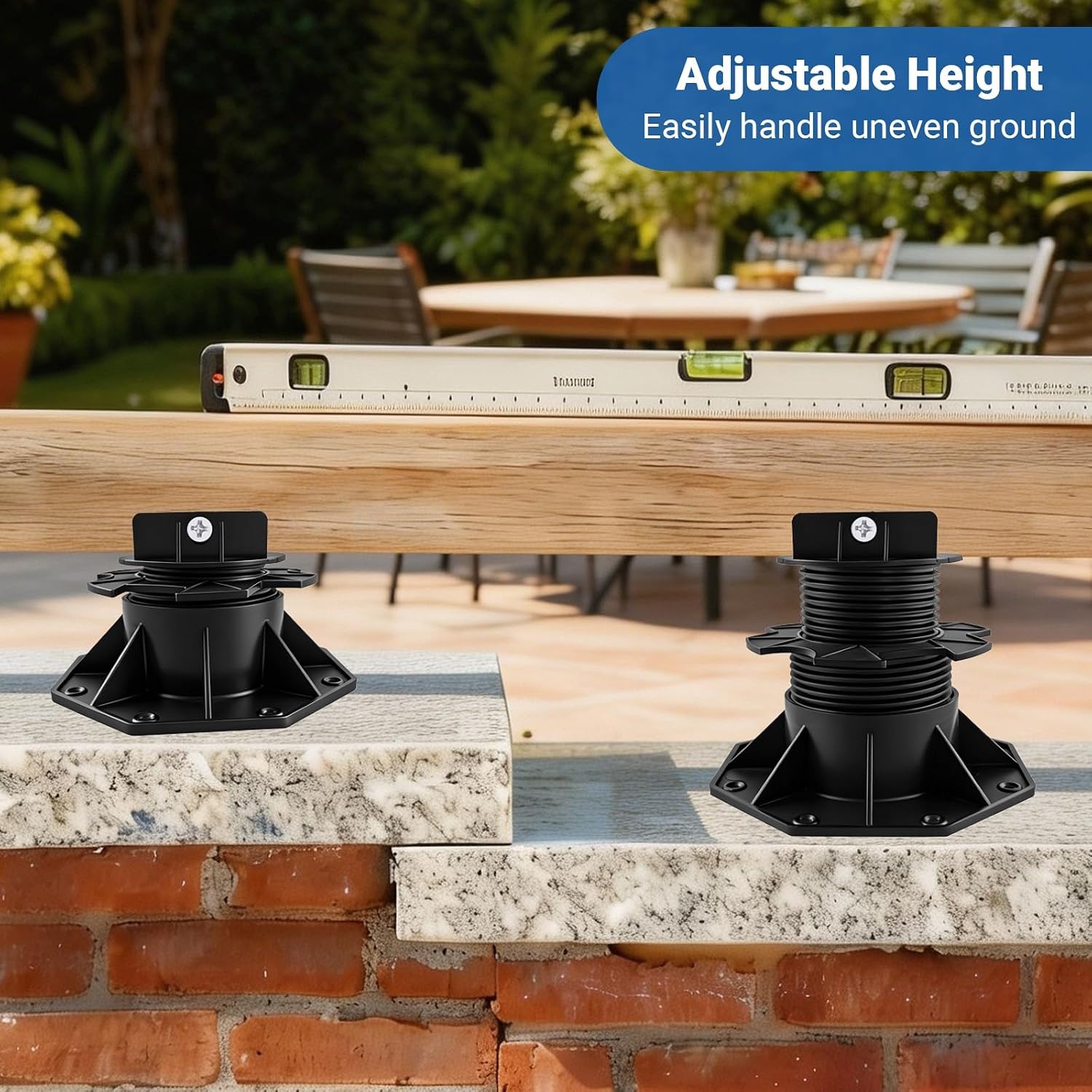
60mm to 135mmWind each pedestal up or down to suit sloping or lumpy ground.
Twelve Per BoxEnough supports to set out a small floating deck or shed floor.
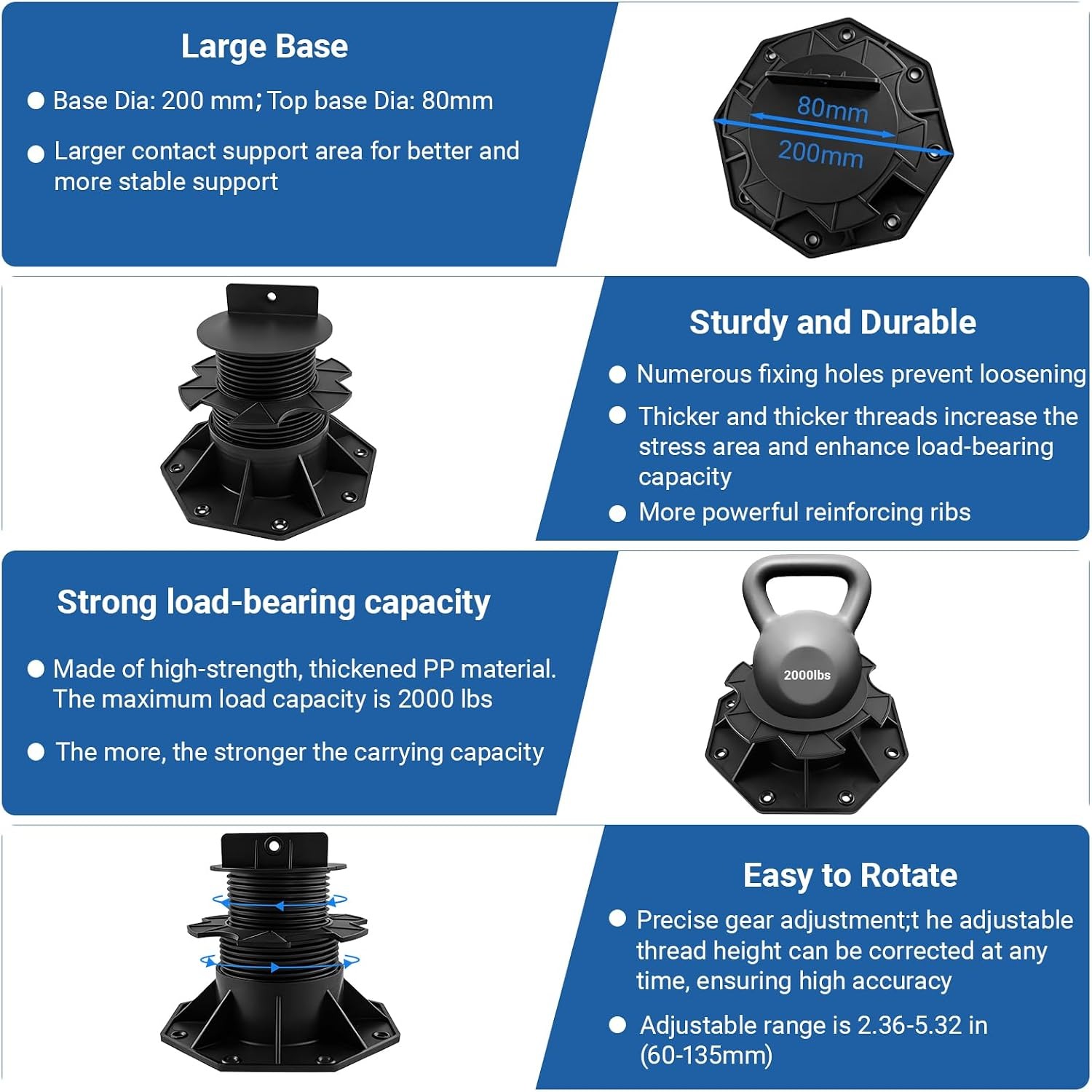
Built For OutdoorsHigh-strength PP resists sun, rain and frost without rusting.
Screw-Fix Top PlateScrew holes in the top plate let you fix straight to the joist.

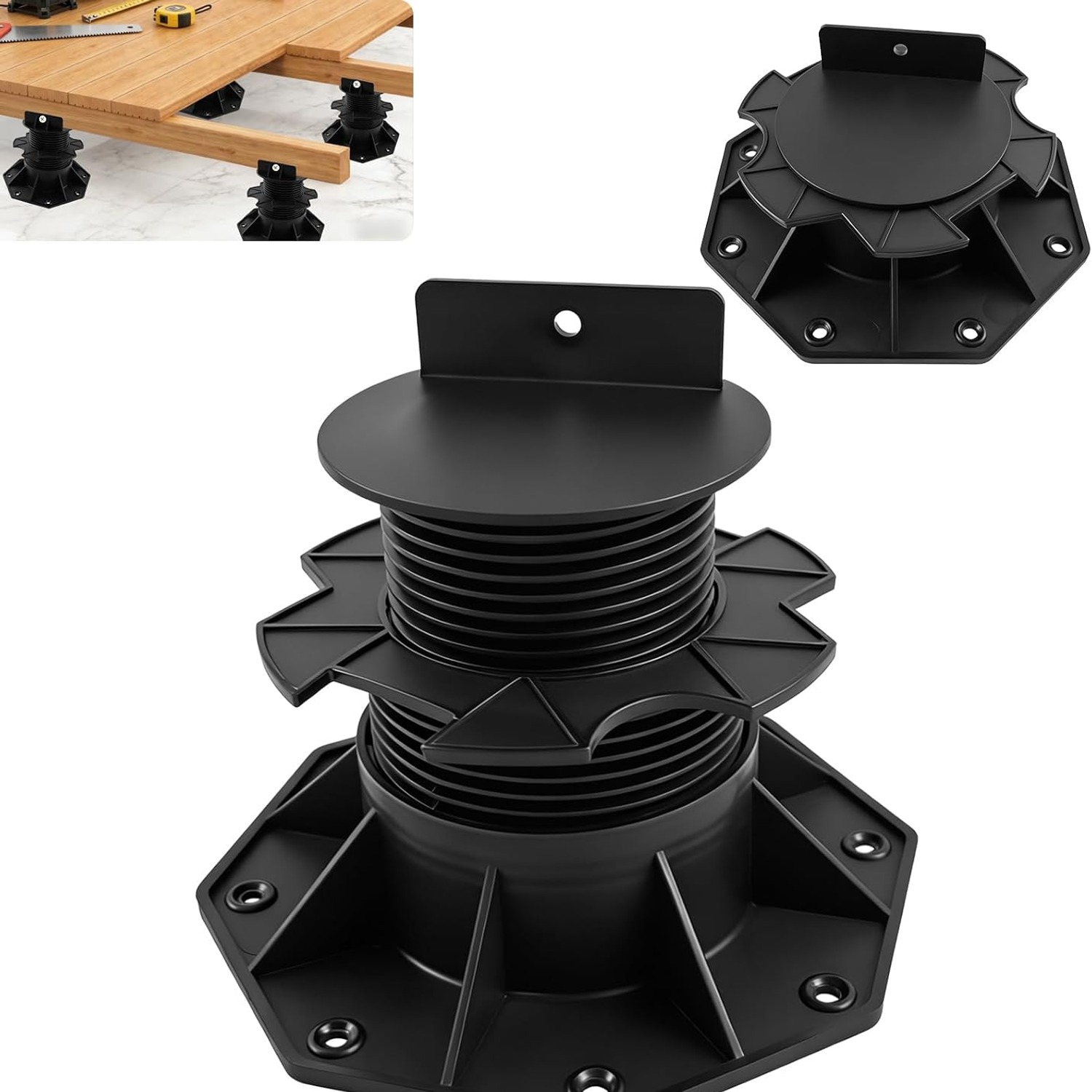
Build a level, long-lasting floating deck with adjustable decking pedestals that take the guesswork out of uneven ground with deck support blocks.

Twelve height-adjustable pedestals wind from 60mm to 135mm, lift timber and composite joists clear of wet soil, and can be re-levelled later if the ground shifts.

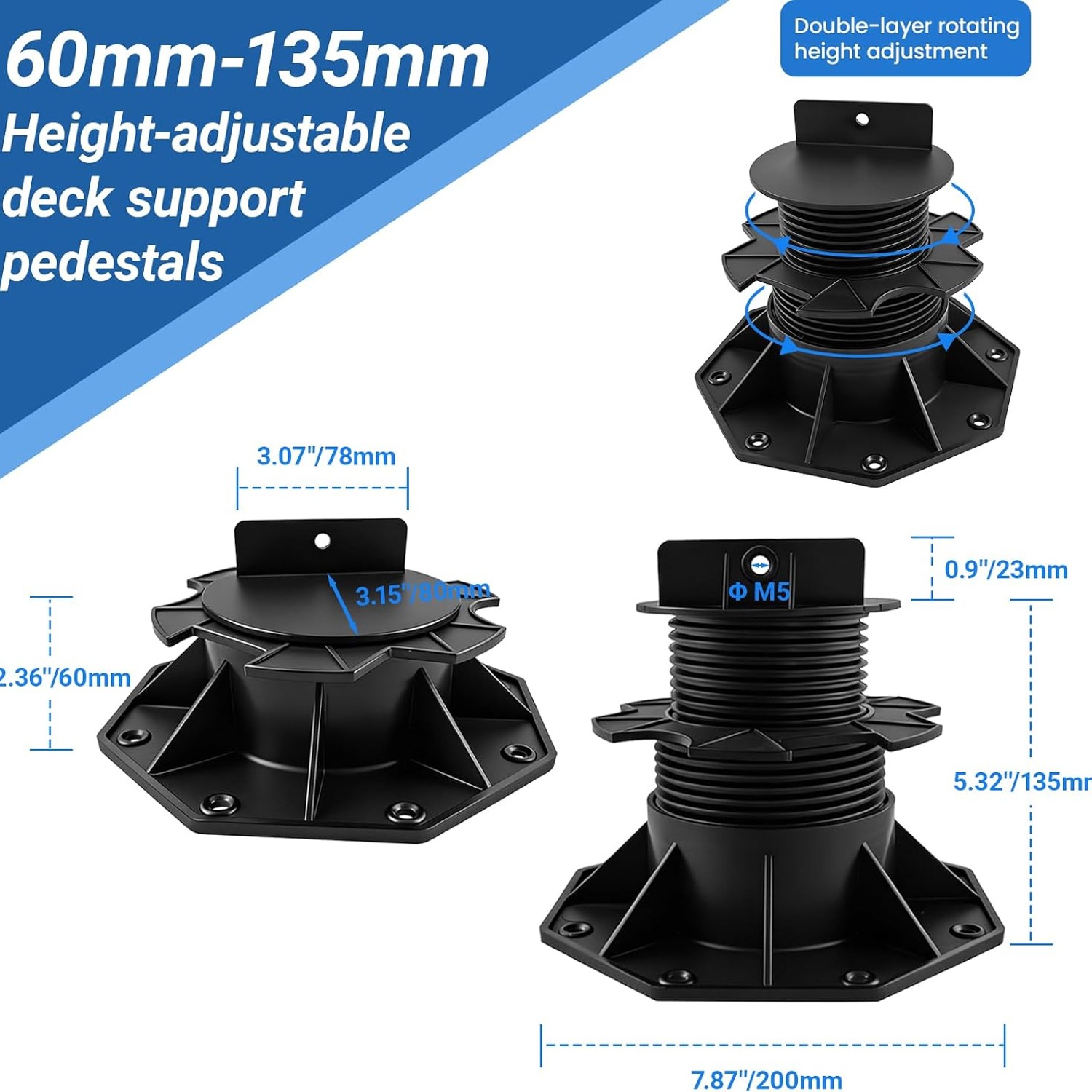
Each pedestal adjusts between 60mm and 135mm, so you can level joists over ground that is far from flat.

The set includes twelve supports, which is a sensible starting point for a small floating deck, a walkway or a shed floor.

Moulded from high-strength PP, the pedestals shrug off sun, rain and frost and will not rust like steel feet.

A rounded base spreads load across the ground and helps stop the deck rocking or tilting underfoot.

Screw holes in the top plate let you fasten the pedestal to a timber or composite joist in seconds.

Adjustable Deck Pedestals 12 Pack (60-135mm)

Ground is never as flat as it looks. Dig a spirit level into a back lawn, a patch of crusher dust or an old concrete slab and you will find dips, humps and falls that make laying a deck frustrating. These adjustable deck pedestals solve that by giving every joist support point its own height setting. You set the frame, pop a pedestal under each bearing point, then wind the collar until the joist sits true.

Adjustable Deck Pedestals 12 Pack (60-135mm)

The adjustment range runs from 60mm up to 135mm. That window is a good fit for low floating decks, raised walkways, platform landings and shed floors where you want the timber off the dirt but not up on posts. Because the height can be changed after the deck is together, you are not stuck with your first guess. If a corner settles a season later, you lift the board, turn the collar and the deck is level again.

Adjustable Deck Pedestals 12 Pack (60-135mm)

The supports are moulded from high-strength PP, a plastic that handles outdoor life well. It does not rust, it does not rot, and it will not feed termites the way a buried timber offcut does. The maker notes good resistance to corrosion and oxidation, and says the material holds its shape through long exposure to sun, rain and frost. For New Zealand conditions, that mix of UV and heavy summer rain is exactly the test a deck support has to pass.

Adjustable Deck Pedestals 12 Pack (60-135mm)

Installation is deliberately simple. The top plate carries small screw holes, so you drive fixings straight up into the joist and the pedestal stays put while you work along the frame. There is no concrete to mix, no post holes to dig and no waiting for a cure. For anyone replacing old timber blocks or trying to avoid concrete piers on a rental or a temporary structure, that speed matters.

Adjustable Deck Pedestals 12 Pack (60-135mm)

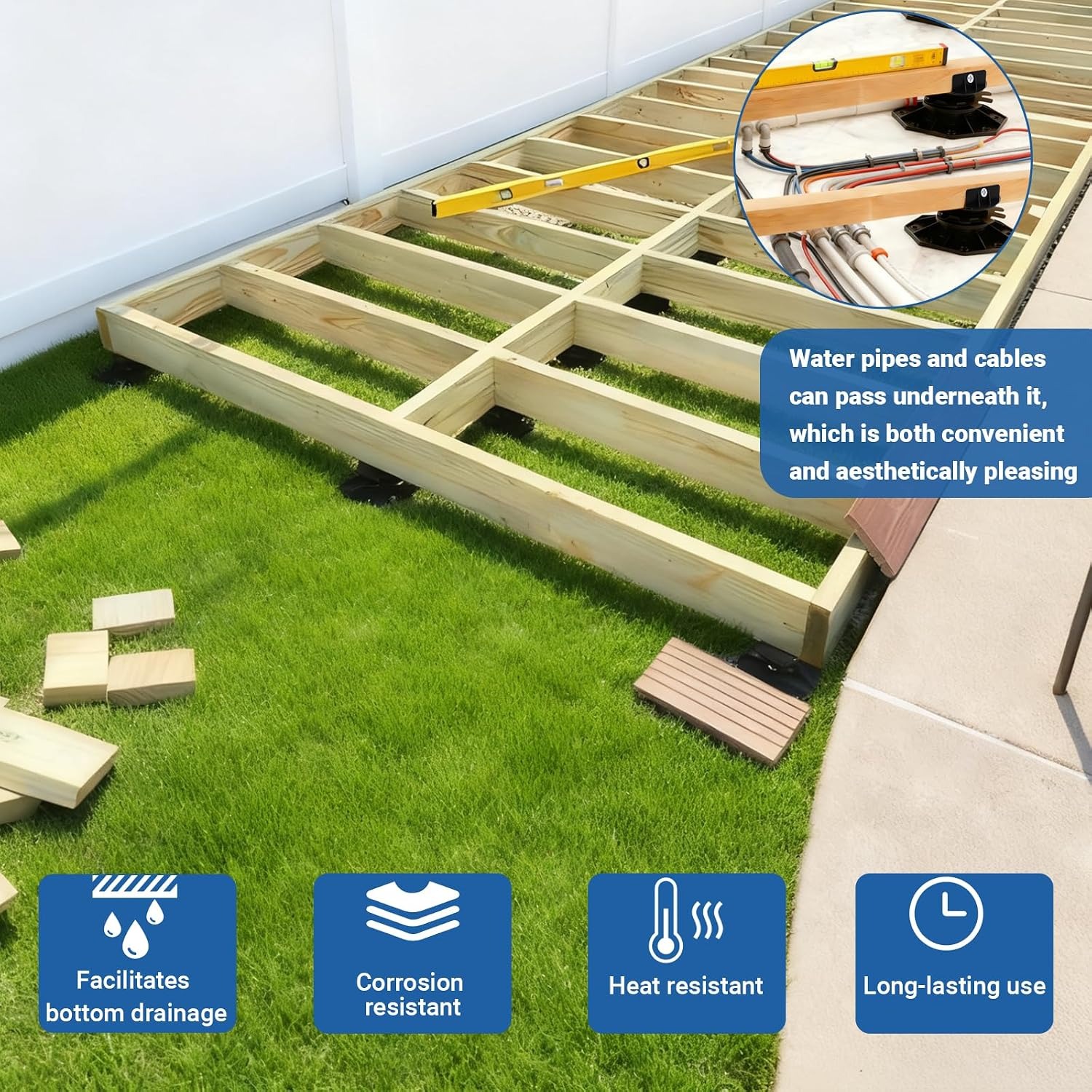
Typical uses include backyard decks, patios, multi-level deck sections, walkways, greenhouse and shed floors, and runs of pipework that need to sit clear of the ground. The pedestals work with treated pine, composite and WPC joists, various stone, and engineered mesh flooring. Raising the structure also opens a small gap underneath, which improves drainage and airflow and keeps the underside of your boards drier for longer.

Not sure yet? That is fine.

Fibre, weight and colour are hard to judge from a photograph, and a piece has to feel right in the hand. If it is not right for you, send it back within 14 days of delivery in resaleable condition and we refund the price you paid, including standard delivery. That is a voluntary policy we offer on top of your legal rights.

If it turns up faulty, damaged or not as described, that is on us. The Consumer Guarantees Act 1993 and the Fair Trading Act 1986 covers you, and we pay the return postage. Read the full detail on our refunds and returns page, or ask us anything before you order.

Frequently Asked Questions

What exactly is in the box?

You receive twelve adjustable deck support pedestals with an adjustment range of 60mm to 135mm. They arrive as a single package weighing about 3.4 kg. No joists, screws or decking boards are included.

How far do these pedestals adjust?

Each one winds from 60mm up to 135mm in height. That gives you 75mm of travel to take up dips and falls in the ground. You can set every pedestal to a different height across the same deck.

Can I change the height after the deck is built?

Yes, that is one of the main reasons people choose adjustable supports over fixed blocks. If you can reach the pedestal, you can turn the collar and raise or lower that point. Lifting one board usually gives enough access.

What are they made from?

The maker lists high-strength PP, a tough outdoor-grade plastic. It resists corrosion and oxidation, so it will not rust or rot in wet soil. The listed colour is black.

What load will one pedestal carry?

A load rating is not specified in this product record, so we will not quote a figure. If your deck carries unusual weight such as a spa, planters or a large outdoor kitchen, have the frame and support spacing checked by a builder or engineer.

Are twelve enough for my deck?

It depends on your joist spacing and the size of the platform. Twelve supports suit a small floating deck, a landing or a short walkway. Measure your frame first, work out how many bearing points you need, then order extra packs if required.

Will these work under composite decking?

Yes. The pedestals support the joist frame, not the boards, so they work with timber, WPC and composite joists alike. Follow your decking brand's joist spacing guidance.

Do I need to pour concrete footings as well?

For low floating decks on firm, compacted ground, many people use these instead of concrete piers. If your soil is soft, boggy or reactive clay, put a paver or compacted pad under each pedestal to spread the load. Check local building rules for anything above a low platform.

Can they sit directly on soil?

They can, but a solid bearing surface is better. Soil compresses and washes out over time, which is what causes decks to sag. A flat paver, a bed of compacted road base or an existing slab makes adjustable deck pedestals even more stable.

Will they work on an existing concrete slab?

Yes, and that is one of the easiest applications. The slab gives a firm, flat base, and the pedestals take up any fall built into the concrete for drainage. You end up with a level timber surface over a sloping slab.

How do I fix the pedestal to the joist?

The top plate has small screw holes. Drive suitable outdoor screws up through those holes into the underside of the joist. Use a screw length that bites well into the timber without punching through the top face.

Are screws included?

No, screws are not listed among the included components. Choose stainless or hot-dip galvanised fixings rated for outdoor use, especially near the coast. Your hardware store can match the screw to your joist material.

Do they need any maintenance?

Very little. Keep leaves and soil from piling up around the bases so water keeps draining, and check the levels after the first wet season. The plastic itself does not need painting, oiling or sealing.

Will they handle New Zealand sun and heat?

The maker says the material resists long exposure to sunlight, rain and frost without deforming, ageing or cracking. Most pedestals also spend their life shaded under the deck, which reduces UV exposure further. Keeping airflow under the deck helps too.

Are they termite proof?

Plastic is not food for termites, which is one reason people move away from buried timber blocks. That said, your joists and boards still need normal termite management. The pedestal only removes one timber-to-ground contact point.

Can I use them under a garden shed?

Yes. Shed floors are a common use, and lifting the floor clear of the dirt keeps the frame drier. Spread the supports evenly under the bearers so the load is shared.

What about a walkway or stepping path?

They suit raised walkways well, particularly over uneven lawn or garden beds. Set a pedestal at each end of a frame section and keep spans short. This is a tidy approach for floating deck supports on a sloping block.

Can I stack them to get more height?

We would not recommend stacking. These are designed to work as single units within their stated 60mm to 135mm range. For greater heights, use proper posts or a stirrup-and-post system.

Will the deck rock or wobble on them?

A rounded base spreads the load and helps the deck sit firm, and the maker says the design resists swaying and tilting. Wobble almost always comes from soft ground or a pedestal that has not been wound down to touch. Check each bearing point carries weight before you fix the boards.

Do they improve drainage under a deck?

Lifting the frame off the ground opens a gap for water to run and air to move. That keeps the underside of your joists drier and slows rot. It also gives you a little space for cables or irrigation lines.

Can I use them to support pipework?

Yes, the maker lists pipework among the applications. Setting pipe runs on height-adjustable supports keeps them off wet ground and lets you set a consistent fall. Secure the pipe to the top plate with a suitable clamp.

Are they suitable for a multi-level deck?

They are listed as suitable for multi-level decks within the stated height range. Use them for the lower platform or step sections. Higher levels will need a conventional post system.

What size are they packed?

The package measures 25 x 25 x 22.2 cm and weighs 3.4 kg. It is a compact box that fits easily in a car boot. Store the spares somewhere dry until you need them.

Is black the only colour?

The colour listed for this item is black. No other colour option is specified in this record. Black sits quietly in shadow under a deck, so it is rarely noticeable once the boards are down.

How do I get the whole deck level?

Set a string line or a long straight edge with a level across your frame, then wind each pedestal until the joist just kisses the line. Work from the highest point of the ground outward. Recheck once the full frame is together, because small shifts are normal.

Do they come with instructions?

Installation is straightforward, with screws passing through the top plate into the joist. If anything is unclear when your set arrives, contact us and we will help you work through the setup. Most people have the first few pedestals placed within minutes.

How long does delivery take?

Orders are dispatched once payment clears, and tracking is emailed to you as soon as the parcel is scanned. Metro deliveries are usually quicker than regional runs. You can check the current estimate at checkout for your postcode.

Can I order more than one pack?

Yes, and for anything larger than a small platform it is wise to. Count your bearing points, add a couple of spares, then order accordingly. Buying in one go keeps the batch consistent.

Do these make a good gift for a DIY friend?

They do if the person has a deck or shed project lined up. They are practical rather than decorative, so pair the pack with a level or a box of outdoor screws. Anyone who has fought a wobbly platform will understand the value straight away.

What if they are not right for my project?

If the pedestals do not suit your build, contact us within the returns window with your order number and we will walk you through the options. Keep the items unused and in their original packaging where possible. We would rather sort out a swap than leave you with supports that do not fit the job.

Adjustable Deck Pedestals, A Practical Buyer's Guide

6 min read Decking Pedestal Company

The problem with flat ground that is not flat

Anyone who has set out a deck frame knows the feeling. You measure, you square it up, you drop it onto the ground, and one corner floats two centimetres in the air. Lawns slope. Old slabs have a fall built in for drainage. Crusher dust settles unevenly after rain. Even a surface that looks level to the eye will usually be out by enough to make the finished deck rock.

The old fix was packers. Bits of treated pine, broken pavers, folded damp-proof course, whatever was lying around. They work for a while. Then the timber rots, the pavers crack, the packers slip, and you are back under the deck with a crowbar wondering how it all got so sloppy.

Adjustable deck pedestals replace guesswork with a dial. Each support winds up or down to its own height, so the joist above it sits exactly where you want it. Set it once, check it with a level, and move on.

How these pedestals work

The design is simple on purpose. A broad base sits on the ground or slab. Above it, a threaded column screws in and out to change the overall height, in this case anywhere from 60mm to 135mm. On top sits a plate with small screw holes, which you fix to the underside of your joist with outdoor screws.

That rounded base matters more than it looks. A wider footprint spreads the load over more ground, which is what stops a support slowly pushing into soft soil. The maker notes the base design helps the deck resist swaying and tilting, and in practice the difference between a firm deck and a bouncy one is usually how well the load is spread at the bottom.

The column is moulded from high-strength PP. That is a plastic chosen for outdoor work because it does not rust, does not rot, and keeps its shape through sun, rain and frost. In a country where a deck can sit at fifty degrees in the sun one week and under a storm the next, that stability is the whole point. Steel feet rust. Timber blocks rot and attract termites. Plastic just sits there.

Good deck support blocks let you fix a mistake later. These do. If a pedestal settles after the first wet season, lift a board, reach the collar, and turn it until the joist comes back to level.

Who this set suits

Twelve pedestals with a 60mm to 135mm range covers a specific kind of job, and it is worth being honest about which jobs those are.

They suit low floating decks, the sort you build on a lawn or over an existing slab without digging post holes. They suit landings, platform steps and short raised walkways through a garden. They suit shed and greenhouse floors, where lifting the bearers clear of the dirt is the difference between a floor that lasts and one that goes soft in five years. They also work under runs of pipework that need to sit off the ground with a consistent fall.

What they are not is a post system. If you need to stand a deck a metre off the ground, or you are building over a steep drop, you need stirrups, posts and proper footings, and probably a conversation with a builder. These pedestals live in the low-level world, and they do that job well.

Working out how many you need

This is where people under-order. Twelve sounds like a lot until you draw the frame.

Start with your joist spacing, which for most timber decking is 450mm centres and for many composite boards is 300mm or 400mm. Check what your board manufacturer specifies, because composite in full sun needs closer support than people expect. Then work out your bearer or joist support spacing along each run. A support point every 600mm to 900mm along a bearer is a common starting figure, but your framing plan should drive it.

Multiply the rows by the points per row, add a couple of spares, and that is your number. A three metre by two metre platform will often need more than one pack. Ordering them together keeps the batch consistent and saves a second delivery wait.

Getting the base right

The pedestal is only as good as what it sits on. This is the part that separates a deck that stays level from one that sinks in a corner.

On an existing concrete slab you are already sorted. Sweep it clean, place the pedestals and wind them to height. The slab takes the load and nothing moves.

On soil or lawn, do some groundwork first. Scrape back the turf, compact the surface, and set a flat paver under each pedestal. A 300mm square concrete paver is cheap and does a remarkable amount of work spreading load. On soft or reactive clay, go bigger or compact a bed of road base first. Skipping this step is the single most common reason low decks end up uneven after a year.

Also think about water. Make sure the ground under the deck drains away from the house, not towards it. One of the quiet benefits of a pedestal system is the gap it creates, which lets water run and air move under the boards. That airflow keeps the underside of your joists drier, and dry timber lasts.

Setting them level

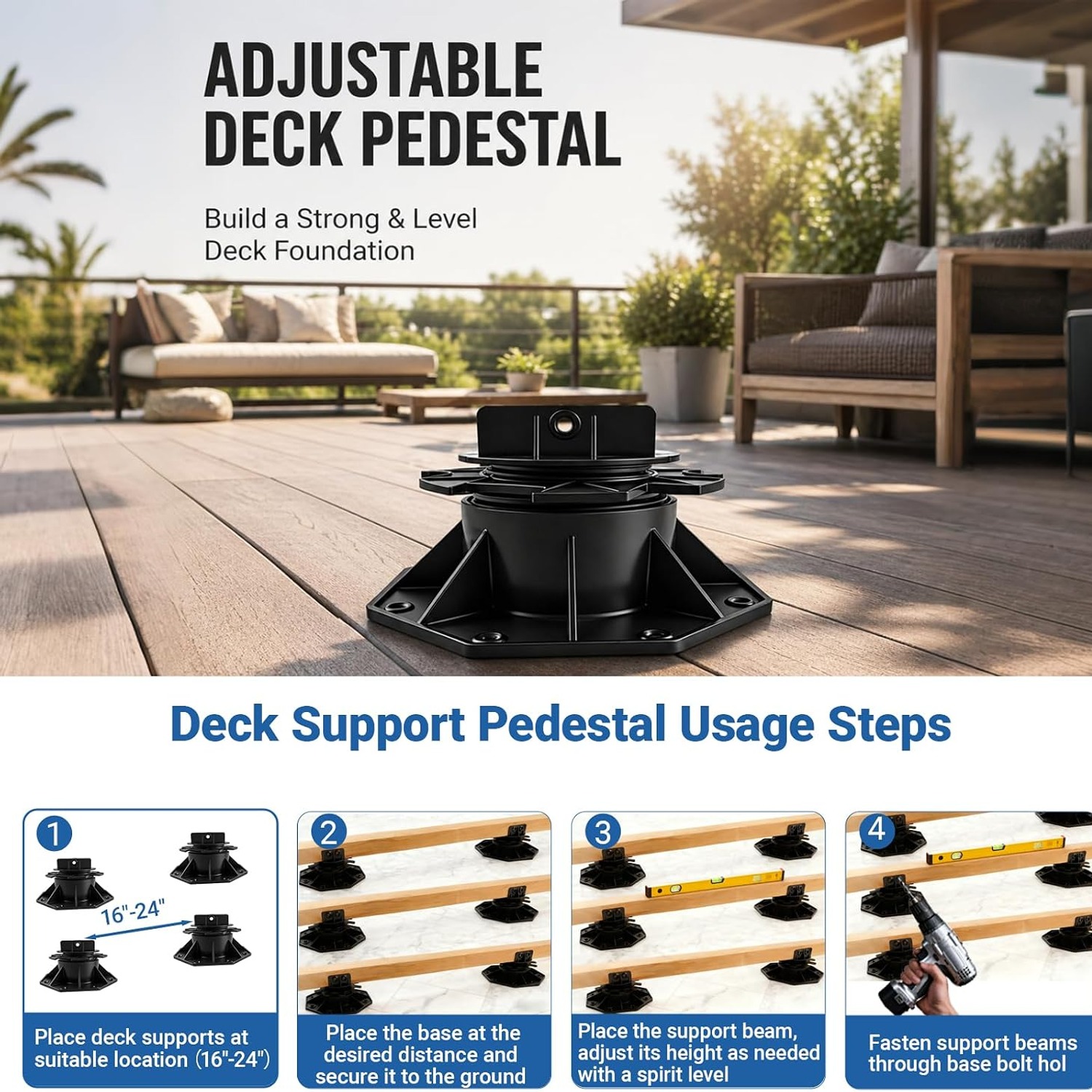
Get your frame built and squared first, then bring the pedestals in. Find the highest point of the ground under the deck footprint, because that point sets your minimum height. Place the first pedestal there and wind it to roughly the lower end of its range.

Run a string line or lay a long straight edge with a spirit level across the frame from that first point. Work outward, placing a pedestal at each bearing point and winding until the joist just touches the line. Do not force it. The joist should rest on the pedestal, not be lifted off its neighbours.

Once every support is in, walk the deck and feel for any softness. A point that does not carry weight needs a quarter turn up. Then fix the top plates to the joists with outdoor-rated screws, stainless or hot-dip galvanised if you are anywhere near the coast. Screws are not supplied, so pick them up with the timber.

Recheck everything after the first heavy rain. Ground settles. That is normal, and fixing it takes two minutes with these supports instead of an afternoon with a crowbar.

Looking after them

There is not much to do. Twice a year, clear leaves and soil from around the bases so water keeps draining freely. If mud builds up, a rinse with plain water is enough. Avoid solvents and harsh chemical cleaners on the plastic.

After the first wet season, drop down and check your levels. If one corner has moved, adjust it. After that, most people only look again if they notice a bounce or a new squeak. The supports themselves need no painting, oiling or sealing.

The short version

If you are building something low, something flat, and something that has to sit on ground that is anything but flat, adjustable deck pedestals are the sensible answer. This twelve pack covers heights from 60mm to 135mm, fixes to timber or composite joists with a few screws, and lets you re-level later when the ground does what ground does.

Put a paver under each one, set them with a string line, and check them after the first big rain. Do that and you will have a deck that stays true for years, with none of the concrete, post holes or curing time the old method demanded.

Browse the shop

Ready to level your deck?

Count your bearing points, add a few spares, and order the pack that covers your frame in one go.

Ask us a question

Page summary

Adjustable Deck Pedestals 12 Pack (60-135mm) is a set of twelve height-adjustable deck support blocks, model GHB-89H6. Each pedestal adjusts between 60mm and 135mm to level joists over uneven ground, and can be re-adjusted after installation if the ground settles. The supports are moulded from high-strength PP for outdoor use and are finished in black. The top plate has screw holes for fixing directly to timber, WPC or composite joists. Package dimensions are 25 x 25 x 22.2 cm with a shipping weight of 3.4 kg. Country of origin is China. Load rating, colour options beyond black, and warranty terms are not specified in this record. Uses include floating decks, patios, walkways, shed floors and pipework support.